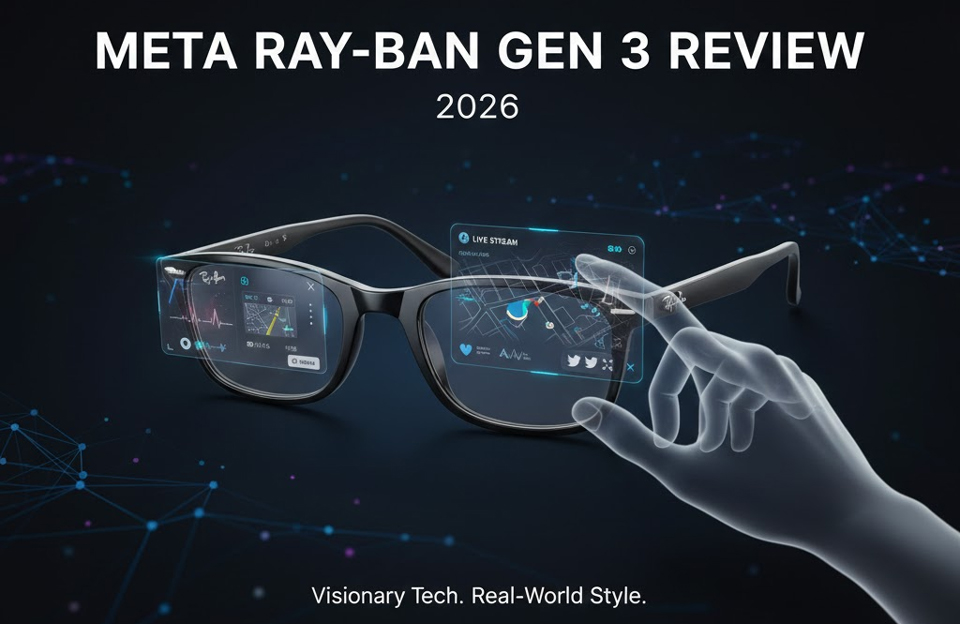
When the Meta Ray-Ban Gen 3 dropped earlier this year, my feed was instantly flooded with tech influencers calling it “the death of the smartphone.” Look, I’m a digital strategist who loves tech, but I also know that 90% of what we see online is just hype.
I decided to grab a pair (the classic Wayfarer style) and actually wear them in the real world—no studio lighting, no sponsored scripts. Just me, a busy remote professional, trying to see if having AI literally sitting on my face is a game-changer or just a creepy gimmick for $299.
Here is what I found out after seven days of testing.
The “AI Vision” is Actually Useful (Mostly)
The biggest upgrade in the Gen 3 is the multimodal AI. You can look at something and ask Meta what it is.
- The Reality Check: I was at a local coffee shop yesterday, looked at a sign written entirely in Italian, and said, “Hey Meta, translate this.” Within two seconds, a voice in my ear told me the exact ingredients of the pastry. It felt like a sci-fi movie.
- For US Creators: If you are vlogging down the streets of New York or exploring a new city, the hands-free POV video is incredible. The stabilization is finally good enough that your followers won’t get motion sickness.
The Audio: Better Than My AirPods?
I hate wearing earbuds all day; they hurt my ears and make me feel disconnected.
The open-ear audio on the Gen 3 is surprisingly crisp. I took three client Zoom calls while walking my dog, and no one could tell I wasn’t sitting in my home office. The microphones do an excellent job of blocking out wind and traffic noise.
The Ugly Truth: Battery Life & Privacy
This is where the marketing videos lie to you.
- The Battery Drain: If you are just listening to Spotify and asking the AI a few questions, they will last about 4 hours. But the moment you start recording 60-second video clips for Instagram or TikTok? The battery plummets. I found myself putting them back in the charging case way too often.
- The “Creep” Factor: The little white LED light pulses when you record, but honestly, people still don’t notice it. As someone who cares about digital privacy, wearing a camera on my face in public still feels a bit weird.
Meta Ray-Ban Gen 3: Pros & Cons (2026 Edition)
| Feature | The Good | The Bad |
| Camera Quality | Stunning 12MP ultra-wide shots. | Struggles heavily in low-light/night settings. |
| Meta AI | Fast voice translation and object recognition. | Sometimes gives generic “Wiki-style” answers. |
| Battery Life | The charging case holds multiple full charges. | Glasses die quickly during heavy video recording. |
| Comfort | Lighter than Gen 2; feels like regular Ray-Bans. | Only comes in two frame styles right now. |
Financial Check: Should You Spend the $299?
If you are a content creator, a real estate agent doing virtual tours, or just someone who hates pulling out their phone every five minutes, these are a solid business expense.
Budgeting Tip: Tech toys are fun, but don’t blow your emergency fund on them. Run the $299 through my 50/30/20 Rule Calculator first. If it fits into your 30% “Wants” category, go for it.
Protecting Your Biometrics
Remember, when you use a wearable device, Meta is collecting your voice data and visual environment.
Security Reminder: Always go into the Meta View app settings and turn off “Voice Data Storage” to keep your daily conversations private. Read my full breakdown on AI-Powered Cybersecurity in 2026 to secure your digital life.
Final Verdict
The Meta Ray-Ban Gen 3 isn’t going to replace your iPhone yet. But for $299, it is the first piece of wearable tech that actually makes my day-to-day life slightly easier without looking ridiculous.