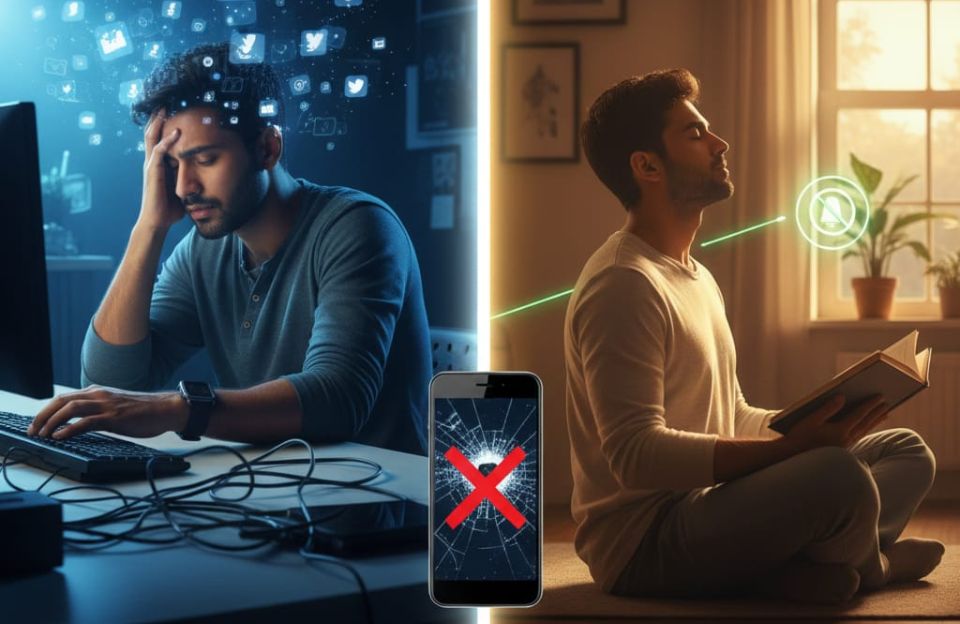
If you’ve been using smart devices for a few years, you know the frustration: your smart light needs one app, your thermostat needs another, and your security camera refused to talk to your smart speaker. It was a digital mess.
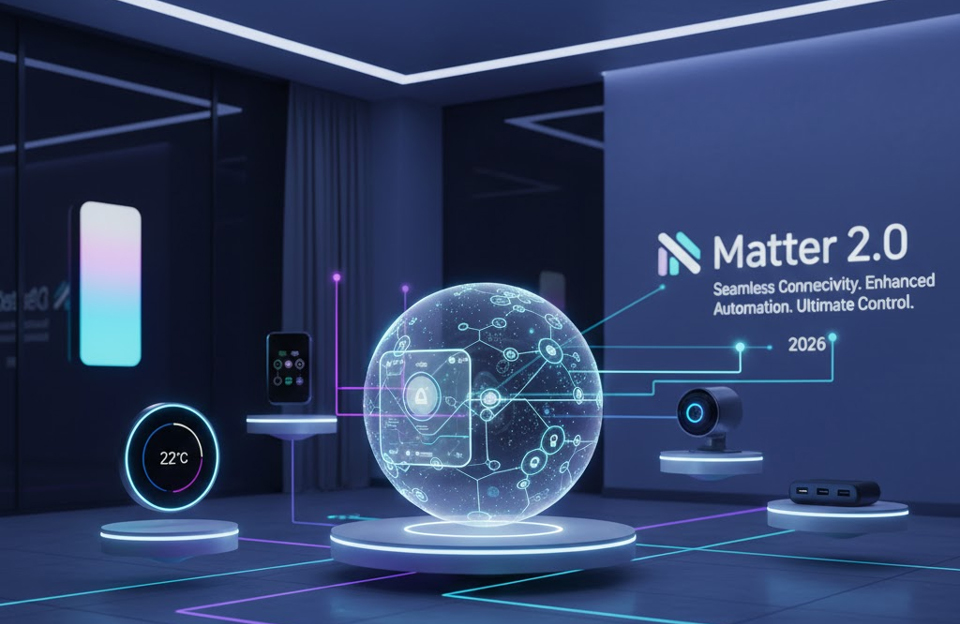
Fast forward to 2026, and the “Smart Home Wars” are officially over. Thanks to the global adoption of Matter 2.0, we finally have a universal language for our gadgets. Whether you use Apple Home, Google Home, or Amazon Alexa, your devices now work together seamlessly.
In this guide, we’ll look at the best Matter-enabled gear to create a high-performance, minimalist home setup that actually makes your life easier, not more complicated.
What Makes Matter 2.0 Different?
In 2026, Matter 2.0 isn’t just about “connectivity”; it’s about reliability and speed.
- Local Control: Your devices no longer need to send a signal to a server in another country just to turn on a light. Everything happens locally on your “Thread” network, meaning near-zero lag.
- Multi-Admin: You can control your smart lock with your iPhone, while your partner uses their Android phone simultaneously without any sync issues.
Top Matter 2.0 Devices for Your 2026 Setup
1. The Universal Hub: Apple HomePod (Gen 3) vs. Google Nest Hub (Gen 4)
Both of these devices now act as Matter Controllers and Thread Border Routers. They are the “brains” of your home.
If you’re a heavy gamer, you’ll want to ensure your smart hub doesn’t interfere with your bandwidth. See our NVIDIA GeForce Now vs. Xbox Cloud Gaming 2026 guide for network optimization tips.
2. Smart Lighting: Philips Hue Bridge-Free Bulbs
With Matter 2.0, you can finally ditch the dedicated “Bridges.” New Hue bulbs connect directly to your network.
- Pro Tip: Use “Adaptive Lighting” to automatically sync your lights with the sun’s position.
This pairs perfectly with our Sleep-Syncing Protocol 2026 to help reset your circadian rhythm.
3. Climate Control: Ecobee Smart Thermostat Premium
The Ecobee now supports Matter 2.0 air quality monitoring, meaning it can trigger your air purifier (of any brand) if it detects pollen or dust levels rising.
The Minimalist Approach: “Invisible” Tech
In 2026, the trend is Invisible Tech. We are moving away from bulky gadgets toward sensors that hide in plain sight.
- Smart Glass: Windows that tint automatically based on the sun’s heat.
- Presence Sensors: Unlike old motion sensors, these can tell if you are sitting perfectly still on a sofa and will keep the lights on for you.
Security and Privacy in the Matter Era
With all these devices talking to each other, security is a major concern. Matter 2.0 uses blockchain-level encryption to ensure that when you say “Open the door,” the command is verified and secure.
Your home network is only as strong as your overall digital security. Don’t overlook the basics—read our AI-Powered Cybersecurity 2026 guide to protect your smart home from external threats.
Budgeting for Your Smart Home Upgrade
Building a smart home can get expensive. A full Matter 2.0 setup for a 2-bedroom apartment can cost anywhere from $1,500 to $5,000.
Not sure if you should buy that new smart fridge? Plug your numbers into our 50/30/20 Rule Calculator to see how much of your “Wants” budget is left for tech upgrades.
Final Verdict: Is 2026 the Year to Go All-In?
Yes. If you’ve been waiting for smart home tech to “just work,” the wait is over. Matter 2.0 has solved the fragmentation problem. By choosing devices that support this standard, you are future-proofing your home and ensuring that your lifestyle remains as seamless and efficient as possible.

Amanda Thomas is a wellness researcher and a full-time digital nomad dedicated to human optimization. By blending data-driven biohacking with geographic arbitrage, they have mastered the art of living a high-performance lifestyle while traveling the globe. Amanda Thomas’s mission is to help remote workers achieve peak focus and longevity without burnout.