For more than ten years, Grand Theft Auto V hasn’t just been a game—it’s been a massive digital hangout. But as we move through 2026, the hype for GTA VI has shifted. People aren’t just talking about the lighting effects or how big the map is; they’re talking about the economy.
Word from industry insiders is that Rockstar is planning to completely flip the script on how we handle in-game assets. There’s a lot of talk about a system that finally blurs the line between the money you make in the game and value in the real world.
The New “Grind”: Play-to-Earn 2.0
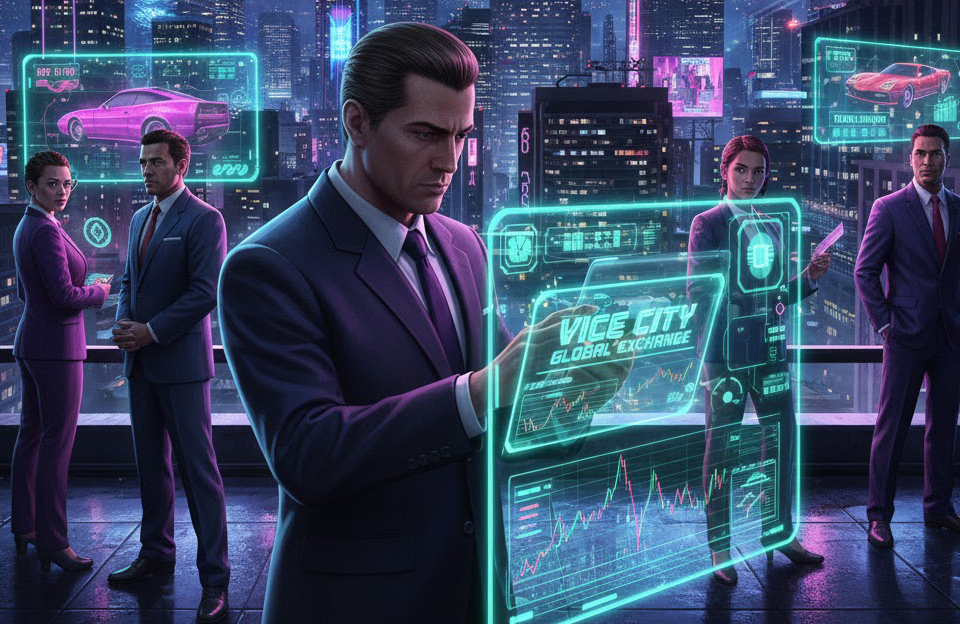
By 2026, the old-school “grind” is getting a makeover. We’re moving past those clunky, first-gen NFT games that felt more like chores than entertainment. Instead, GTA VI is expected to feature a high-level in-game stock market and a crypto exchange that actually reacts to real-world market swings.
It’s a move that could turn every heist and street race into more than just a way to buy a faster car—it could make your time in the game feel like a genuine investment.
Risks: The Dark Side of Virtual Wealth
- Cybersecurity: If in-game assets become valuable, “hacking” takes on a whole new meaning. Players will likely need to use two-factor authentication (2FA) and potentially hardware-linked security.
- Regulation: Governments are already looking at how to tax “virtual gains.” If you make a “killing” on the Vice City stock market, the taxman might eventually want a share.
Final Thoughts
In 2026, gaming has moved past being a way to kill time—it’s now a serious financial playground. Whether Rockstar decides to go all-in with actual crypto or just builds a hyper-realistic simulated economy, the hustle you learn on the streets of Vice City is starting to look a lot like real-world business. Managing assets, trading gear, and navigating markets in-game isn’t just “playing” anymore; it’s basically a trial run for the modern digital economy.

Eera Thains is a gaming hardware analyst and tech journalist with over a decade of experience tracking console lifecycles. Specializing in next-gen architecture and AI-driven rendering, they provide deep-dive insights into the future of Sony and Microsoft ecosystems. When not benchmarking 8K performance, Eera consults on virtual economy shifts and cloud gaming infrastructure.