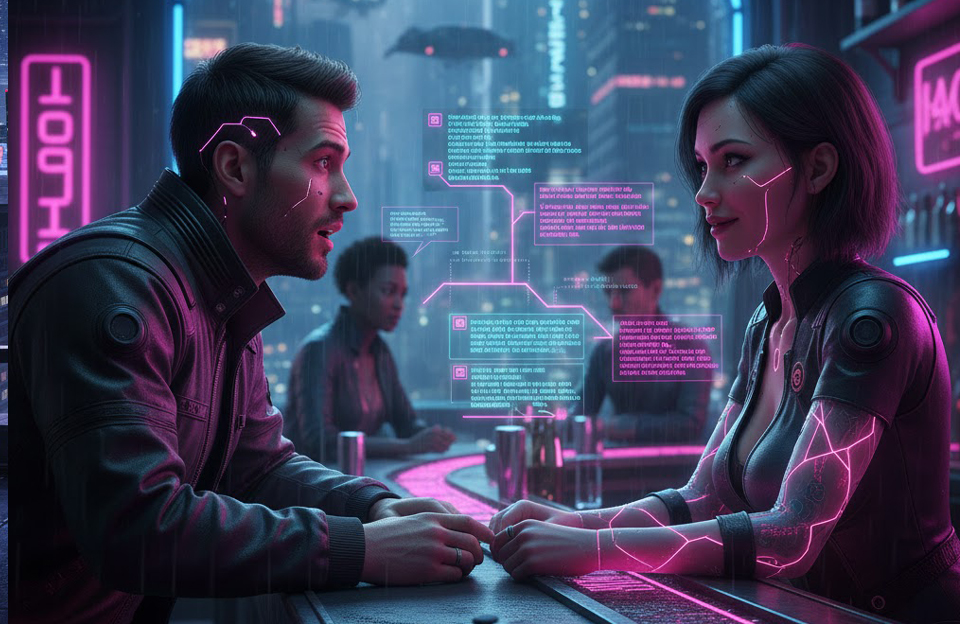
If you’ve played an RPG in the last twenty years, you know the drill: you approach a villager, they repeat one of three pre-set lines, and you move on. But in 2026, that “dialogue tree” is officially dead.
We are entering the era of Living NPCs (Non-Player Characters)—entities powered by Large Language Models (LLMs) that don’t just follow a script, but actually think, remember, and react to your specific actions.
What is an AI-Powered NPC?
An AI NPC is a game character that uses generative AI to produce real-time dialogue and behavior. Instead of a developer writing 1,000 lines of code for a character, they give the character a “personality profile,” a set of goals, and a memory buffer.
The Three Breakthroughs of 2026
The shift from “bot” to “being” is driven by three key technologies:
1. Long-Term Memory (Persistent States)
In 2026, if you insult a shopkeeper in a game, they won’t forget it five minutes later. Using Vector Databases, NPCs now have “persistent memory.” They will remember your past choices, your playstyle, and even your tone of voice, affecting how they treat you ten hours later in the story.
2. Real-Time Voice Synthesis
Gone are the days of robotic text-to-speech. Tech like NVIDIA ACE (Avatar Cloud Engine) allows NPCs to speak with human-like emotion, perfectly synced to their facial expressions, all generated on the fly.
3. Emergent Behavior
NPCs makes the game world feel like it exists even when you aren’t looking—a concept similar to the 24/7 automated operations we see in the business world today.
The High CPC Angle: The Infrastructure of Immersion
Why is this a high-value topic for your blog? Because the “AI Gaming” niche is where big tech spending happens.
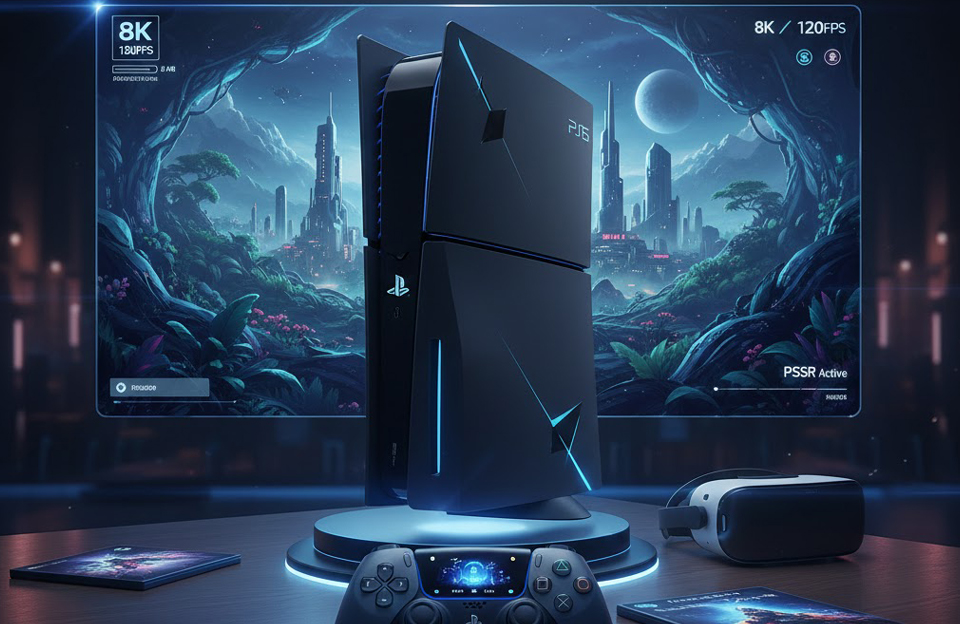
- Hardware: Running these models locally requires massive NPU (Neural Processing Unit) power, driving sales for next-gen GPUs.
- Cloud Services: Many studios use “inference as a service,” meaning every line an NPC speaks generates revenue for cloud providers.
- Micro-Transactions.
Final Thoughts: The Infinite Game
We are moving toward a future where no two players will ever have the same experience. Just as biohacking optimizes the body, AI is optimizing the “soul” of our digital worlds. In 2026, you don’t just play the game; you live in it.

Eera Thains is a gaming hardware analyst and tech journalist with over a decade of experience tracking console lifecycles. Specializing in next-gen architecture and AI-driven rendering, they provide deep-dive insights into the future of Sony and Microsoft ecosystems. When not benchmarking 8K performance, Eera consults on virtual economy shifts and cloud gaming infrastructure.