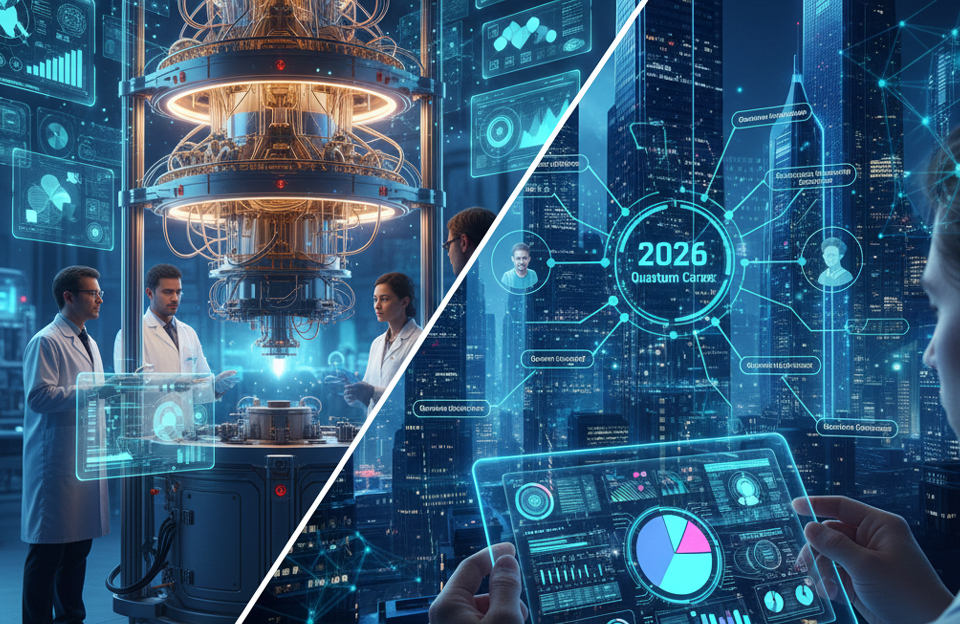
For decades, the world of computing has been built on ‘bits’—simple 1s and 0s. But as we cross into 2026, the “Quantum Decade” has officially arrived. We are moving from classical logic to a world of Superposition and Entanglement. If you feel like the current software market is oversaturated, you aren’t alone.
The Learning Roadmap: From Zero to Quantum Engineer
Entering this field requires a shift in mindset. You don’t need a PhD in Physics, but you do need a structured approach:
- Mastering the Mathematical Foundation
You cannot “guess” your way through quantum logic. Focus on Linear Algebra, Probability Theory and Complex Numbers
- Learning the “Big Three” Frameworks
In 2026, the industry has standardized around a few key programming environments. Much like choosing the right AI tools is vital for productivity, choosing your framework defines your ecosystem:
Qiskit (IBM), Cirq (Google) and Braket (Amazon)
Top Certifications to Aim for in 2026
Self-learning is insufficient if you want to attract the interest of foreign recruiters. Credentials must be verified. High-value choices consist of:
- IBM Quantum Developer Certification
- MIT xPRO Quantum Computing
- Microsoft Azure Quantum Learning Path
How to Position Yourself in the Job Market
You don’t have to be a hardware engineer. The 2026 job market is looking for:
- Quantum Algorithms Researchers: Developing new ways to solve problems.
- Quantum Software Tools Developers: Creating the “UI” for quantum machines.
- Quantum Business Analysts: Bridging the gap between technical possibility and corporate ROI.
Final Thoughts
The shift from classical to quantum is a “once-in-a-generation” transition. By starting your education journey now, you are positioning yourself at the top of the talent pyramid before the field becomes crowded. The barrier to entry is high, but the rewards—both intellectual and financial—are even higher.

Jessica is a technology strategist and digital analyst specializing in the intersection of AI and future-tech. With over 5 years of experience tracking the evolution of machine learning, they help businesses navigate the complexities of the 2026 digital economy. When not analyzing quantum frameworks, Jessica explores the impact of automation on global job markets.