
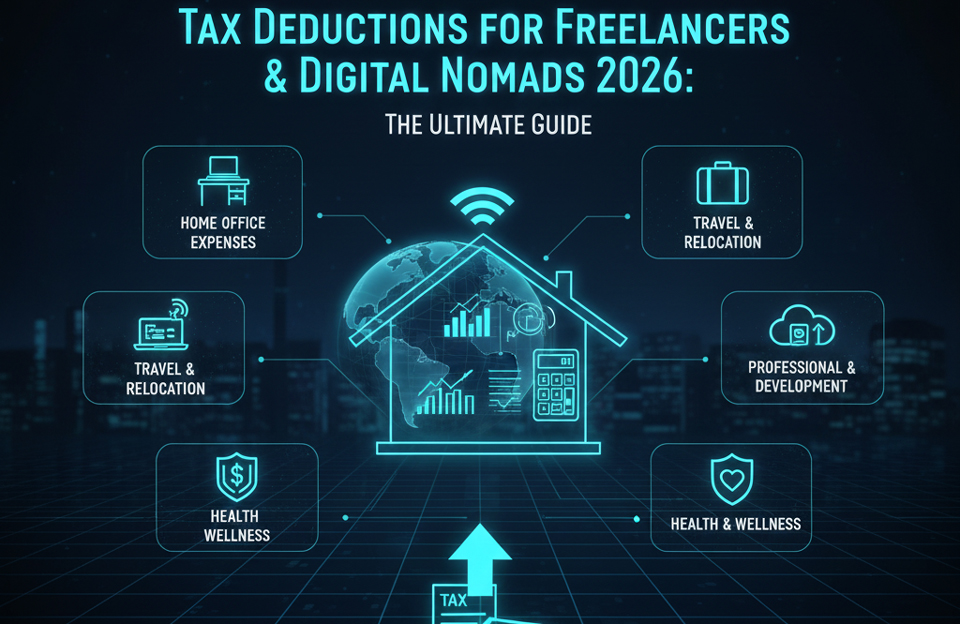
As a freelancer or digital nomad in 2026, your “office” could be a co-working space in Mexico City or a desk in your spare bedroom. While the freedom is great, the tax paperwork can be overwhelming. Most remote professionals pay more tax than they need to simply because they don’t know what they can legally “write off.”
In 2026, tax authorities have updated their rules for the remote workforce. Here is how you can use these deductions to keep more of your hard-earned money.
The Big One: Home Office Deductions
If you work from home, you can deduct a portion of your housing costs. This isn’t just for homeowners; renters can use it too.
- The 2026 Rule: The space must be used regularly and exclusively for business.
- What to Deduct: A percentage of your rent, mortgage interest, electricity, and even cleaning services.
- Calculation: If your office occupies 10% of your home’s square footage, you can deduct 10% of your total home expenses.
Essential Tech & Equipment Write-Offs
Any tool you buy to perform your job is usually 100% deductible. This includes:
- Hardware: Laptops, second monitors, and ergonomic chairs.
- Software: Adobe Creative Cloud, Slack Pro, or AI-powered agents.
If you’re using AI Agents for Business Automation, the subscription fees are a fully deductible business expense.
Travel & Connectivity for Digital Nomads
For nomads, the line between “travel” and “work” is thin. To claim these, the primary purpose of your trip must be business.
- Co-working Memberships: 100% deductible.
- Internet Costs: If you buy a dedicated data plan for work, it’s a write-off.
Remember These “Hidden” Deductions
- Health insurance premiums are frequently 100% deductible for independent contractors.
- Marketing & Ads
- Cybersecurity Software
Subscriptions for AI-Powered Cybersecurity tools are essential business expenses in 2026.
Final Verdict: Documentation is Key
The IRS and other tax bodies don’t take “my word for it” as proof. Use an app like Expensify or QuickBooks to scan every receipt. By the end of 2026, these small deductions could save you enough to fund your next six months of travel.

Leo Sinclair is a financial writer and early adopter of decentralized finance. Specializing in fractional ownership and global income streams, they focus on making complex wealth-building strategies accessible to everyone. Leo Sinclair provides actionable insights for the modern investor looking to diversify in the 2026 market.