
For years, “carbon credits” were something only massive airlines or oil companies talked about to make their balance sheets look “green.” But as we move through 2026, the game has shifted. It’s no longer just a corporate PR move; it’s becoming a legitimate side hustle for the average person.
If you’re tired of hearing about “passive income” through crypto scams or saturated drop-shipping markets, personal carbon credits might actually be the breath of fresh air you’re looking for.
What’s the Big Idea?
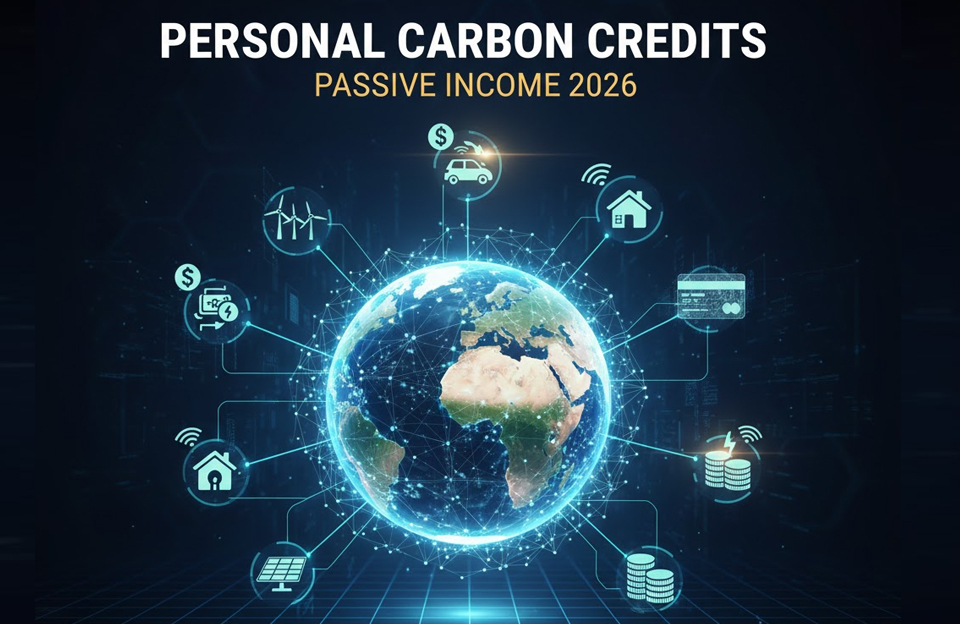
Fundamentally, the idea is straightforward: You are compensated for the CO2 you don’t release. In 2026, we will be able to precisely track individual impacts due to the growth of IoT (Internet of Things) and more advanced blockchain verification.
Choosing a plant-based diet, switching to a smart thermostat, or riding an e-bike for work all produce data. That data is “tokenized” into carbon credits. Companies that are struggling to hit their net-zero targets then buy these credits from a marketplace, and that money ends up in your digital wallet.
How People Are Actually Making Money This Year
It’s not about getting rich overnight; it’s about “stacking” small wins that add up to a monthly dividend. Here’s how the most successful “carbon earners” are doing it right now:
- Smart Home Integration: We’re seeing a huge spike in people using AI-driven home managers (the irony isn’t lost on us) that automatically sell excess solar energy or carbon offsets back to the grid during peak hours.
- Verified Commuting: New apps now sync with your wearable tech or vehicle data. If you choose the train over a gas-guzzling SUV, the difference in emissions is calculated and credited to you instantly.
- The “Eco-Investment” Platforms: Think of these like the Robinhood of carbon. You can invest in reforestation or direct-air-capture projects. As these projects mature and the price of carbon rises (which it is, aggressively), the value of your stake grows.
Why 2026 is the Tipping Point
Why is this happening now and not five years ago? Two reasons: Regulation and Tech. Governments have finally stopped “suggesting” carbon limits and started mandating them. This has created a massive demand for credits. Simultaneously, the tech has become invisible. You don’t have to fill out a spreadsheet to prove you recycled; your smart bin and your apps do the heavy lifting for you.
The Bottom Line
Is it “passive”? Mostly. You still have to make the initial lifestyle choices. But once the systems are linked, the income flows without you having to clock in.
We’re moving into an era where being a good global citizen isn’t just a moral choice—it’s a financial strategy. If you aren’t looking into how to monetize your lifestyle footprint this year, you’re essentially leaving free money on the table.

Leo Sinclair is a financial writer and early adopter of decentralized finance. Specializing in fractional ownership and global income streams, they focus on making complex wealth-building strategies accessible to everyone. Leo Sinclair provides actionable insights for the modern investor looking to diversify in the 2026 market.